

When HR Leaves the Boardroom: What Purpose Looks Like in Practice
Updated: Mar 5
| Written by Hind Lagraich, Group HR Director, Omorfia Group
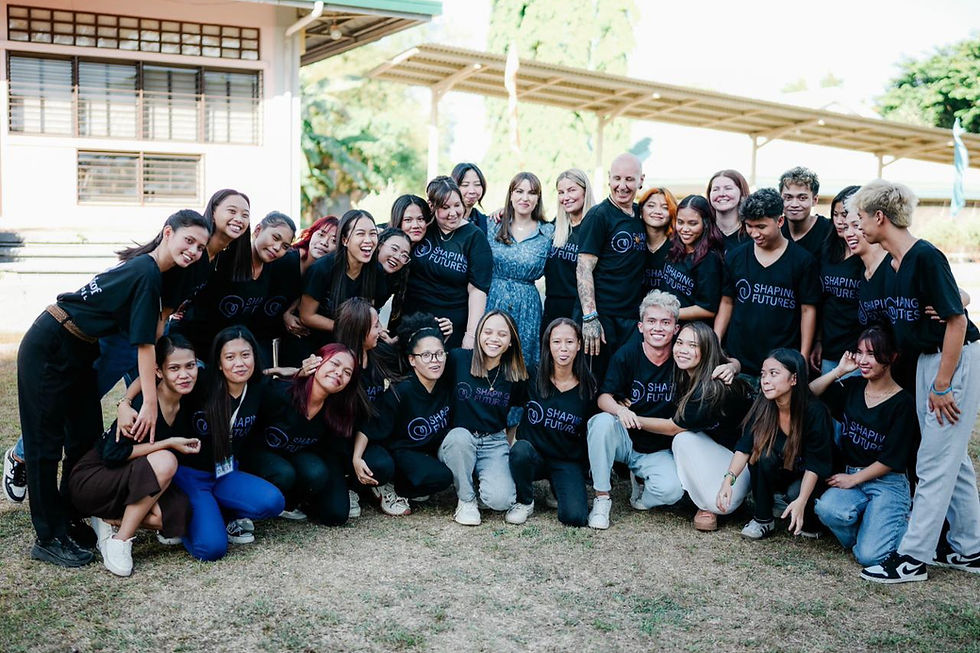
In HR, we often talk about purpose as if it lives inside strategies, frameworks, and presentations. We discuss inclusion. Employability. Social mobility. Belonging. That language matters because it helps us build systems and set direction.
But every now and then, I’m reminded that purpose is not something we manage. It is something we witness.
Moments like these reconnect me with why I chose a career in HR in the first place. Beyond processes and structures, our profession is ultimately about people, creating environments where someone can grow, belong, and build a future that once felt out of reach.
Many HR leaders experience these reminders in unexpected ways. Sometimes it’s a conversation with a frontline colleague whose life changed through a first opportunity. Sometimes it’s watching a trainee grow into confidence. Sometimes it’s seeing inclusion move from policy into lived experience.
For me, that reminder came far from the familiar rhythm of corporate life, in the Philippines, alongside the participating youth of SOS Children’s Villages Pilipinas, where our Omorfia Rise Programme is not simply delivered, but deeply experienced.
A room full of futures being shaped.
What Changes When HR Steps Outside the Office
The boardroom has its own language, KPIs, pipelines, attrition, capability. It is an important language because it drives accountability and business clarity.
But there is another language you hear when you step into communities. It is a language made of resilience, hope, and the quiet courage of young people trying to redefine what is possible for themselves.
We designed Omorfia Rise to create genuine pathways into employability for individuals from underserved backgrounds. Through partnerships with organisations like SOS Children’s Villages Pilipinas and global industry leaders such as Schwarzkopf, the programme combines technical training with professional readiness, connecting learning directly to real work opportunities.
On paper, that may sound straightforward. On the ground, it is transformational.
You don’t just see a programme in action, you see dignity being restored through skill, confidence growing through mentorship, and opportunity becoming tangible.

Beyond CSR: Employability as a Human Commitment
There is a common misconception that programmes like these sit on the fringe of business, a CSR initiative disconnected from workforce strategy. My experience tells me the opposite.
In service-driven industries like beauty and wellness, talent is everything. Frontline professionals carry the customer experience, represent the brand, and shape organisational culture every day.
Building employability pipelines is not charity. When done with integrity, it is one of the most strategic decisions an organisation can make.
What makes Omorfia Rise meaningful to me is that it was never designed as a one-off gesture. It is built for long-term impact, equipping young adults with real skills, internationally aligned standards, and the confidence to pursue meaningful careers across the Omorfia ecosystem.
Here, purpose is not performative. It is operational.
The Most Powerful Moment Was Not in the Curriculum
Technical training matters, whether in hair artistry, nail craftsmanship, or professional service standards. But the most powerful part of the experience for me was not the curriculum.
It was meeting individuals who once believed that a professional, especially international, career was meant for someone else. Watching that belief shift is profoundly humbling. You begin to see employability not as a theoretical concept, but as a turning point in someone’s life.
In those moments, the role of HR becomes clearer.
Not just to fill vacancies, but to expand access. Not just to design policies, but to create possibility.
Inclusion That Becomes Opportunity
At Omorfia, this philosophy extends beyond the Rise Programme. Our Gold-winning inclusion strategy supporting People of Determination at Employee Happiness Awards is built on the same belief, inclusion must lead somewhere.
Not just to a statement, but to a career.Not just to intent, but to dignity and belonging.
True inclusion is measured through outcomes: representation, strong support systems, manager readiness, and sustainable employment journeys.
When organisations create workplaces where people are not only welcomed but empowered, inclusion stops being symbolic. It becomes operational, embedded in how the business functions every day.
When HR steps outside the office, purpose stops being a strategy and becomes a person, a possibility, and a turning point in someone’s life.
What Purpose-Led HR Has Taught Me
When HR steps outside the boardroom, a few lessons become impossible to ignore:
Purpose must be grounded in people, not branding.
Employability is one of the most impactful forms of inclusion.
Talent pipelines can be built through opportunity, not just sourcing.
Partnerships matter, especially when rooted in shared responsibility.
Leadership evolves when you witness opportunity firsthand.
And perhaps most importantly:Impact is not a corporate narrative. It is a human one.
A Different Kind of Responsibility
At Omorfia, wellness is not just a service, it is a responsibility. That responsibility extends beyond the guest experience to the communities we engage, the talent we nurture, and the futures we help unlock.
Programmes like Omorfia Rise remind me that HR is not only about managing the workforce of today. It is about shaping the workforce, and the world of tomorrow.
For HR leaders, the question is no longer whether purpose belongs in business. The question is whether we are willing to build systems where purpose creates real opportunity.
Because when HR steps outside the office, purpose stops being a value. It becomes a place. A person. A possibility.
And once you have seen that, it becomes impossible to believe that purpose lives only in the boardroom.


Comments